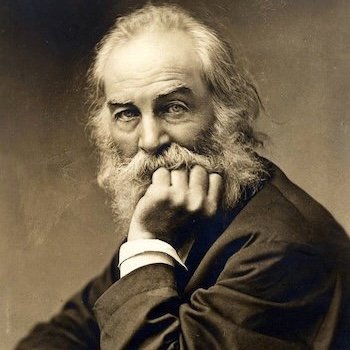
Walt Whitman didn’t just write poetry; he constructed a blueprint for an American identity that was, in his time, purely aspirational. When he published Leaves of Grass in 1855, the United States was a fractured collection of states teetering on the edge of civil war. Yet, Whitman spoke in the future tense. He wasn’t necessarily a “prophet” in the mystical sense, but he was a visionary who predicted the social, psychological, and technological trajectory of modern life by identifying the latent potential of the democratic experiment.
At the heart of Whitman’s “prediction” was his radical inclusivity. In “Song of Myself,” he famously wrote, “I am large, I contain multitudes.” In the mid-19th century, this was a scandalous assertion of radical empathy. Whitman looked at a rigid, hierarchical world and predicted a future defined by the breaking of social barriers. He wrote about the dignity of the laborer, the equality of women, and the sacredness of the individual regardless of race or class. While the world he lived in was defined by exclusion, he predicted a “Great City” where people of all backgrounds would walk “with their arms around each other’s necks.” Today’s pluralistic society, though still imperfect, is the realization of the “multitudes” Whitman insisted were the soul of democracy.
Furthermore, Whitman anticipated the psychological landscape of the 21st century: the “Global Village” and the hyper-connected self. Long before the internet or social media, Whitman practiced a form of “virtual” presence. He often addressed his future readers directly, saying, “I consider’d long and seriously of you before you were born.” He believed that through his words, he could transcend time and space to touch someone a century later. This desire for radical connectivity—the idea that we are all nodes in a massive, vibrating web of human experience—is the fundamental premise of our digital age. Whitman predicted a world where the distance between “I” and “You” would collapse, a concept that feels strikingly modern in an era of instant global communication.
Whitman also foresaw the shift in how we view the human body and sexuality. He was one of the first major Western poets to treat the body not as a shameful vessel, but as a “miracle” equal to the soul. In “I Sing the Body Electric,” he celebrated the physical form with a frankness that led to his firing from a government job. He predicted a future where the human experience would be liberated from Victorian repression. Our contemporary focus on body positivity, wellness, and the open expression of diverse sexual identities is a direct echo of the “physicality” Whitman championed.
However, Whitman’s most profound prediction was about the fragility of the American project. He didn’t just predict progress; he predicted the struggle. In Democratic Vistas, he warned that without a “moral identity” and a shared cultural soul, the United States would become a hollow shell of materialism and greed. He saw that democracy is not a destination but a continuous process of “becoming.” He predicted that the greatest threat to the future would not be a foreign power, but a loss of the “adhesive” love—the sense of comradeship—that holds a diverse people together.
Was Walt Whitman predicting the future? If we look at the rise of global connectivity, the progress of civil rights, and our modern obsession with the “self,” the answer is a resounding yes. But more importantly, Whitman was creating the future. By writing as if the ideal America already existed, he gave us a goal to grow into. He didn’t just see what was coming; he left us the directions on how to get there, reminding us that the future is always “contained” within the present moment.